
The Sugar Legacy of Mauritius

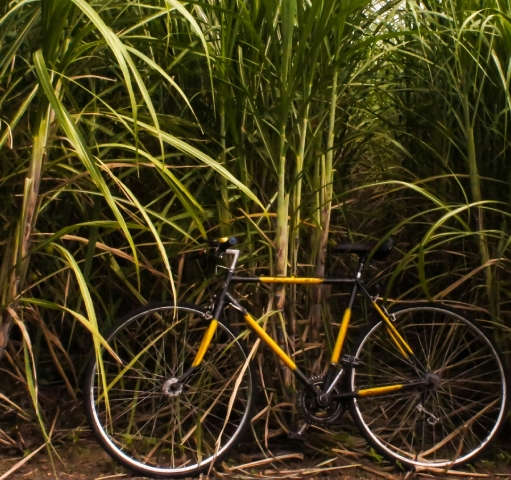
Sugarcane in Mauritius is one of those things you notice almost without trying in Mauritius. It lines country roads, rolls across the landscape in neat green rows and appears in the background of mountain views, village drives and coastal journeys. For generations, it has shaped the island far beyond the fields themselves.
If you want to understand mauritius sugar history, you have to look at more than sugar as a product. You have to look at the plantations, the people who worked them, the villages that grew around them, the mills, the trade routes and even the flavours that later found their way into rum, desserts and everyday life.
This is not simply the story of an old industry. It is the story of how one crop became part of the visual, economic and cultural identity of Mauritius.
How sugarcane arrived in Mauritius
Sugarcane was introduced to Mauritius by the Dutch in 1639. Large-scale cultivation developed later under French rule, particularly from the 1740s under Governor Mahé de Labourdonnais. Over time, cane spread across the island, plantations expanded and sugar became one of the foundations of the colonial economy.
That history also carries difficult chapters. Sugar plantations were first worked through enslaved labour. After the abolition of slavery in 1835, indentured labourers, many arriving from India, became central to the plantation economy. Their presence profoundly influenced the language, food, religion and social fabric of modern Mauritius.
Understanding the sugar story means holding all of that together: prosperity and hardship, industry and migration, landscape and identity.
The plantations that shaped the island
Drive through rural Mauritius and traces of the plantation era are still everywhere.
Old stone chimneys rise unexpectedly above fields. Former sugar estates have become museums, restaurants, homes or cultural spaces. Cane fields still stretch towards mountains in areas where cultivation has been part of the landscape for generations.
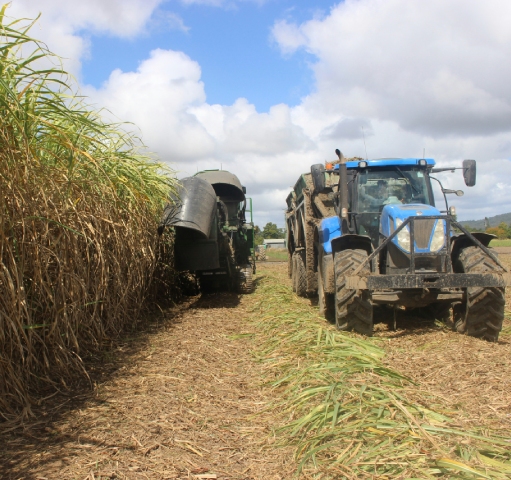
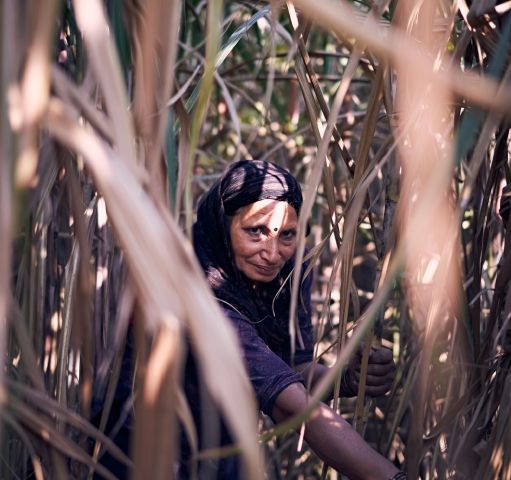
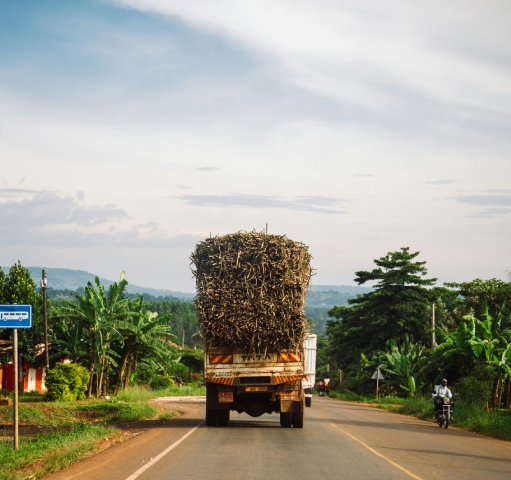
The plantation was once more than a field. Cane had to be planted, cut, transported, crushed and processed quickly. Villages and communities developed around estates and factories, linking daily life closely to the rhythm of the harvest.
Today, there are far fewer sugar factories than before, but sugarcane remains highly visible. The industry has also evolved, with cane contributing not only to sugar but to rum, animal feed, fertilisers and renewable energy.
From sugarcane to rum
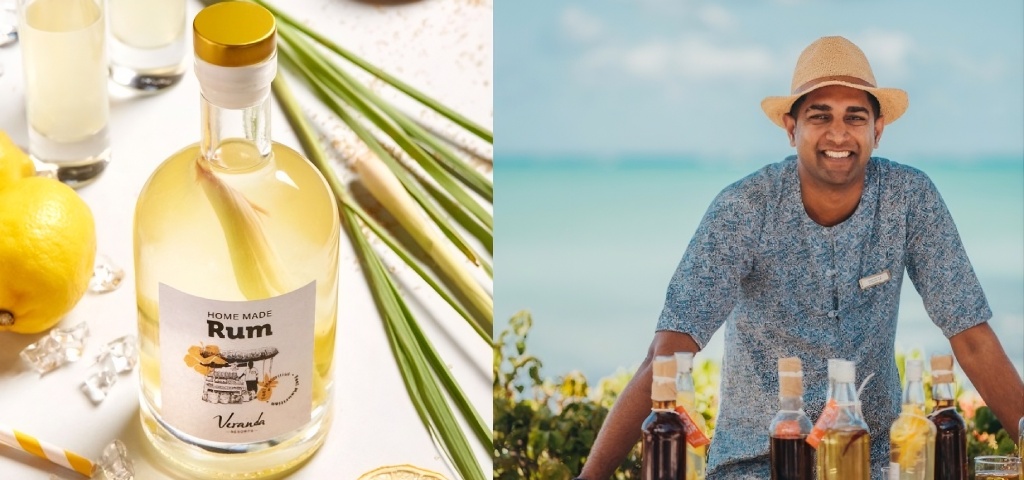
The rum origins of Mauritius are naturally tied to sugarcane.
Rum production developed alongside the sugar industry, using cane and its derivatives. Today, Mauritius produces different styles of rum, including traditional rum associated with molasses and agricultural-style rums made directly from fresh sugarcane juice.
That second story is particularly easy to understand in Chamarel, where sugarcane still grows around the distillery landscape. The Rhumerie de Chamarel, for example, produces pure cane juice rum using cane grown on its own estate.
For travellers, rum offers a sensory way into the sugar story. You can see the cane in the fields, learn how juice is extracted and fermented, then taste how that agricultural ingredient changes through distillation and ageing.
Chamarel, where geology and sugar landscapes meet
Chamarel is one of the most interesting places to see how different stories of Mauritius overlap.
The region is famous for Chamarel 7 Coloured Earth, where naturally coloured volcanic dunes reveal a geological history stretching back millions of years. Their shades of red, brown, blue and violet come from weathered volcanic basalt and the presence of iron and aluminium oxides.
But the drive through Chamarel reveals another landscape too: cane fields, tropical fruit, forested slopes and agricultural land.
That contrast is what makes the area so compelling. In just a few kilometres, you move between geological history and agricultural history, between volcanic earth and sugarcane plantations.
Internal link suggestion: Chamarel coloured earth link.
Sugar in everyday Mauritian culture
Sugar’s influence is not confined to museums or old estates.
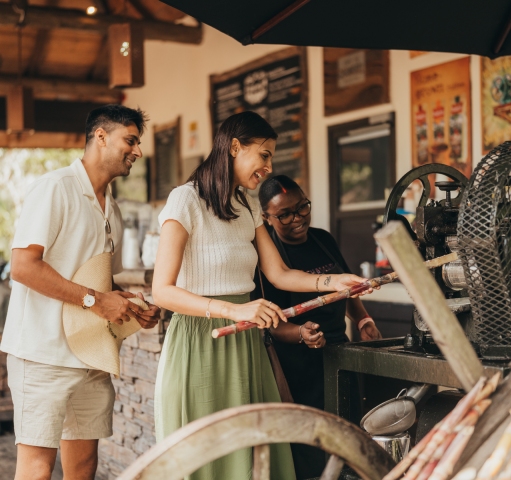
It appears in local sweets and preserves, in rum, in cane juice and in recipes passed through families. It is also there in old factory chimneys and in the familiar sight of cane fields moving in the wind.
Even for Mauritians who have never worked in the industry, the landscape created by sugar remains part of everyday visual memory.
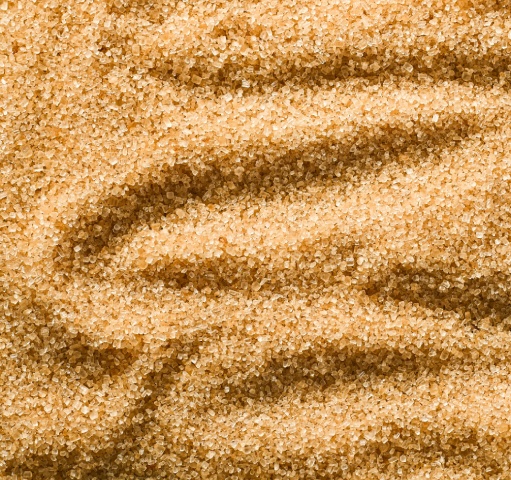
For visitors, that changes the meaning of sugar too. It stops being something that simply arrives in a packet. You begin to see the plant, the work, the history and the people behind it.
Where to explore the sugar story today
If this part of Mauritius interests you, there are several ways to go deeper.
L’Aventure du Sucre in Beau Plan is one of the most comprehensive places to start. Set in a former sugar factory, it traces the history of cane and its influence on Mauritius, from early cultivation to the industry’s modern role.
You can also visit rum distilleries, explore old estate landscapes and simply pay more attention while driving through the countryside. Some of the most evocative reminders of the sugar era are not inside museums at all. They are the chimneys, fields and estate buildings you pass unexpectedly.
A legacy that continues to evolve

Sugar is no longer the single economic force it once was in Mauritius. But its legacy has not disappeared.
The industry has adapted. The fields remain. Rum has developed its own identity. Former estates have taken on new lives. And places like Chamarel allow travellers to connect agriculture, nature and history in one journey.
Perhaps that is the most interesting way to understand mauritius sugar history today.
Not as something finished, but as a story still visible in the land.
Drive slowly through the countryside. Look beyond the beach. Notice the rows of cane stretching towards the mountains. Visit an old estate. Taste a rum made from fresh cane juice. Stand among the volcanic colours of Chamarel.
Sugar is no longer just part of Mauritius’ past. It becomes part of how you see the island.
You may also like
Island Holidays

Mauritius with Kids: Beaches & Wildlife
Culinary Journeys

Mauritian Street Food Culture
Culinary Journeys
